The reason to discontinuing these products varies. In the case of computers the reason support ends is due to the outdated hardware and lack of foreseeable money from supporting it. For operating systems it varies from lack of profit/lack of commercial success (such as BeOS, OS/2) to devices it was for becoming outdated or failing themselves (such as BlackBerry OS).
BeOS
BeOS

|
| Developer
|
Be Inc.
|
| Latest release
|
/ 2000 (R5)
|
| Succeeded by
|
Haiku
|
BeOS was a operating system developed by Be Inc., BeOS originally targeted the PowerPC platforms BeBox and Macintosh, and later 32-bit x86 computers.
- BeOS History
BeOS was developed by former Apple employee Jean-Louis Gassée, the first version of BeOS was released with the BeBox. In 1996 the CEO of Apple Inc., Gil Amelio started negotiations to buy Be Inc., the negotiations ended not working due to the Be Inc. CEO Jean-Louis Gassée wanting $300 million[1] with Apple offering $125 million , Apple instead purchased NeXT (Including NeXTSTEP) from Steve Jobs.
Consoles (BeOS)
- Nintendo
- Nintendo Entertainment system/Famicom
- Super Nintendo Entertainment system/Super Famicom
- Nintendo 64
- GameBoy/GameBoy Color
- Game Boy Advance
- Sega
- Sega Genesis/Megadrive
- Atari
- Atari 5200
- Atari Lynx
- Magnavox
- Odyssey²
| Name
|
Latest version
|
FLOSS
|
Active
|
Recommended
|
| O2EMBeOS
|
?
|
✗
|
✗
|
!
|
- SNK
- Neo Geo
- NEC
- PC Engine/Turbo Grafx 16
- Arcade
Computers (BeOS)
- Commodore
- Commodore 64
- Commodore Amiga
- Commodore 16
- Apple
- Macintosh
- Apple II
- Microsoft
- MSX
| Name
|
Latest version
|
FLOSS
|
Active
|
Recommended
|
| fMSX BeOS
|
?
|
!
|
✗
|
!
|
- x86 CPU
- Sinclair
- ZX Spectrum
- Sharp
- X68000
- Acorn
- BBC Micro
Source Ports (BeOS)
BlackBerry
Blackberry OS

|
| Developer
|
BlackBerry Limited
|
| Latest release
|
/ 2000 (3.6)
|
| Succeeded by
|
BlackBerry 10
|
- For software that emulates BlackBerry OS, see Cellphone emulators#BlackBerry.
BlackBerry OS was an operating system developed by BlackBerry Limited for their devices.
BlackBerry OS later completly reworked into BlackBerry 10 which has since was itself discontinued in 2018. The latest operating system developed by BlackBerry Limited "BlackBerry Secure OS" is based on Android, first used for the Blackberry phone BlackBerry Priv.
- Sony
- PlayStation Portable
Symbian
- For software that emulates Symbian see Symbian emulators
Symbian is a mobile operating system and computing platform designed for smartphones. Symbian was originally developed as a proprietary software OS for PDAs in 1998 by Symbian Ltd.
Multi-system
Arcade
Nintendo
NES
SNES
Game Boy / Game Boy Color
Game Boy Advance
Coleco
ColecoVision
Aracade
Game Engine Recreations and Source ports (Symbian)
- ScummVM
- Doom
EPOC
EPOC
| Developer
|
Psion PLC
|
| Initial release
|
1982
|
| Latest release
|
/ 1994 (4.1.4)
|
| Succeeded by
|
Symbian
|
- Gameboy
- Arcade
- Source port
- Doom
Palm
Palm OS

|
| Developer
|
Palm, Inc.
ACCESS
|
| Latest release
|
/ 2007 (Garnet OS 5.9.4)
|
- For software that emulates Palm OS, see Cellphone emulators#Palm.
Palm OS was a mobile operating system developed by Palm Inc. for personal digital assistants (PDAs), and later for smartphones. Palm OS was installed on Palm Inc's PDA devices, as well as many other devices not developed by Palm Inc.
- Computers
- Apple II
- Commodore 64
- Consoles
- Multi System
- Source Ports
- Doom
- Hexen
- Hexen 2
- Quake
DOS
- For software that emulates DOS on other hardware, see PC Emulator Comparisons.
Born from the dawn of the digital age, DOS, reigned supreme through the 80s and early 90s. Though far from sleek, its unassuming might empowered millions to navigate the nascent world of personal computing.
With bare bones efficiency, DOS offered accessible power. Simple commands unlocked a plethora of tasks, from crafting documents to unleashing the magic of text-based adventures. For countless users, DOS wasn't just a tool; it was a canvas for exploration, a gateway to programming adventures and tinkering with the very fabric of digital logic.
While its limitations challenged and its error messages mocked, DOS fostered a generation of resourceful pioneers, adept at navigating command labyrinths and conjuring digital magic from lines of code. This era forged a unique bond between user and machine, where every keystroke held consequence and mastery felt truly earned.
Though DOS may grace museums now, its influence echoes in every modern operating system. Its legacy of simplicity and raw power reminds us that the most transformative innovations often arise from humble beginnings.
Windows 1.0x/2x/3x were graphical user interfaces (GUIs) built on top of MS-DOS. Those were the programs that runs a window manager on top of MS-DOS operating system. Many of the underlying device drivers and protocols had to be loaded in DOS for 3.11 to use them. On the other hand, Windows 9x (95, 98, ME) were standalone operating systems with DOS compatibility mode. Also NT3.x was an operating system as it included its own micro-kernel and device drivers [1].
Emulators (DOS)
Consoles
- Atari
- Atari 2600
- Atari - 5200
- Atari 7800
- Coleco
- ColecoVision
- Nintendo
- Nintendo Entertainment System/Famicom
- Super Nintendo Entertainment System/Super Famicom
- Game Boy / Game Boy Color
- Game Boy Advance
- DSiWare
- Virtual Boy
- Sega
- Master System / GameGear
- Genesis / Mega Drive
- Saturn
- VMU
- SNK
- Neo-Geo
- Neo-Geo Pocket
- Sony
- PocketStation
- Magnavox
- Odyssey
- Odyssey²
- NEC
- PC-FX
- PC Engine / TurboGrafx 16
- PC-8800 series
- P88SR
- Only compatible with DOS/V incompatible PC-98 machines running MS-DOS.
- GCE
- Vectrex
| Name
|
Latest version
|
FLOSS
|
Active
|
Recommended
|
| DVE (DOS Vectrex Emulator)
|
2.0b
|
!
|
✗
|
~
|
- Emerson
- Emerson Arcadia 2001
- Multi-System
Computers
- Commodore
- Commodore 64
- Amiga line
- Atari
- Atari ST
- Sinclair
- ZX81
- ZX Spectrum
- Sharp
- X1
| Name
|
Latest version
|
X1T
|
X1TZ
|
X1Tw
|
FLOSS
|
Active
|
Recommended
|
| X1EMU
|
0.5
|
✓
|
✗
|
✗
|
!
|
✗
|
✗
|
- Apple
- Macintosh line
- Microsoft
- MSX series
- Amstrad
- Amstrad CPC
- x86
Arcade
- Multi-Arcade
- Capcom System One (CPS-1)
- Sega Model 2
Interpreters
| Name
|
Latest version
|
Extension(s)
|
Accuracy
|
FLOSS
|
Active
|
Recommended
|
| Vision-8
|
1.0
|
CHIP-8
|
High-Mid
|
NC
|
✗
|
~
|
| SVision-8
|
?
|
CHIP-8
S-CHIP
|
High-Mid
|
NC
|
✗
|
~
|
| CHIP-8 Interpreter
|
git
|
CHIP-8
|
High
|
?
|
✗
|
~
|
| C8
|
git
|
CHIP-8
|
Mid
|
?
|
✗
|
✗
|
| Chip8
|
2.2.0
|
CHIP-8
S-CHIP
|
Mid
|
✗
|
✗
|
✗
|
| DOS Chip-8 / VChip-8
|
1.1
|
CHIP-8
S-CHIP
|
Low-Mid
|
?
|
✗
|
✗
|
| Chip8-DOS
|
git
|
CHIP-8
|
Low-Mid
|
✓
|
✗
|
✗
|
Source ports (DOS)
- Super Mario 64
Commodore 64
- For software that emulates Commodore 64, see Commodore 64 emulators.
The Commodore 64 (C64) is an 8-bit home computer released in 1982 by Commodore. It is notable for being one of the first widespread home computers, helping it to expand its collection of games as a result.
Emulators
- Sinclair research
- ZX Spectrum
| Name
|
Latest version
|
FLOSS
|
Active
|
Recommended
|
| Spectrum Simulator
|
?
|
!
|
✗
|
!
|
- Apple
- Apple I
- CP/M
- MOS Technology
-
- KIM-1
- Commodore
-
- VIC-20
| Name
|
Latest version
|
FLOSS
|
Active
|
Recommended
|
| VIC Emulator
|
?
|
!
|
✗
|
!
|
- PET
- Calculators
-
- Hewlett-Packard
| Name
|
Latest version
|
Systems
|
FLOSS
|
Active
|
Recommended
|
| hpemu
|
?
|
HP-35, HP-45, HP-55. HP-80
|
!
|
✗
|
!
|
Interpreters
- CHIP-8
| Name
|
Latest version
|
Accuracy
|
FLOSS
|
Active
|
Recommended
|
| C64 Chip-8
|
git
|
?
|
✓
|
✗
|
?
|
| OmniChip-8
|
git
|
?
|
✓
|
✓
|
?
|
| Chip-8 Emulator
|
?
|
?
|
✗
|
✗
|
?
|
| MoeCHIP-8 for C64
|
git
|
?
|
?
|
✗
|
?
|
VIC-20
The VIC-20 is a home computer released in 1980 by Commodore and the predecessor to the Commodore 64.
- Interpreters
| Name
|
Latest version
|
FLOSS
|
Active
|
Recommended
|
| Vic-20 Chip-8 Emulator
|
1.11
|
✗
|
✗
|
?
|
BBC Micro
The BBC Micro, also known as the BBC Microcomputer System or the Beeb as it was affectionately called, was a series of microcomputers created by Acorn Electronics for the BBC's computer literacy project. They were designed to be rugged, stable, and easy to use.
- Interpreters
| Name
|
Latest version
|
FLOSS
|
Active
|
Recommended
|
| CHIP-8 Simulator BBC/Master
|
?
|
?
|
✗
|
?
|
MeeGo
MeeGo

|
| Developer
|
Nokia, Intel, Linux Foundation
|
| Succeeded by
|
Tizen, Mer
|
Meego is a discontinued operating system based on Linux, using code from Moblin
The Linux Foundation canceled MeeGo in September 2011 in favor of Tizen, which Intel then joined in collaboration with Samsung.[2] A community made fork called Mer forked MeeGo, Mer has been merged into projects such as Sailfish OS, Nemo Mobile (no longer based on Mer, now based on Manjaro Linux), and Yuanxin OS.
- Sony
- PlayStation Portable
MSX
MSX

|
| Developer
|
Microsoft
|
| Latest release
|
/ 1991 (2.31)
|
- For software that emulates MSX on other hardware, see MSX emulators.
The bustling landscape of 1980s home computing witnessed the emergence of the MSX platform, a standardized architecture for home computers. Beyond its versatile hardware, the MSX's success stemmed from its robust software environment, anchored by two key components: MSX-DOS and MSX-BASIC.
- MSX-DOS - A Tailored Disk Operating System
Derived from its namesake, MS-DOS, yet significantly streamlined for the MSX's limited memory footprint (64kB), MSX-DOS provided essential file management and disk access functionalities. Its compact design allowed efficient operation on early MSX machines, enabling users to store programs and data on floppy disks, expanding the platform's potential beyond mere game consoles. The intuitive command-line interface, akin to MS-DOS, fostered accessibility and a community of enthusiastic programmers comfortable navigating its text-based environment.
- MSX-BASIC - Bridging the Gap to Creativity
Built upon an extended version of Microsoft's Basic, MSX-BASIC served as the primary programming language for the MSX platform. Its accessible syntax and clear commands lowered the barrier to entry for coding, empowering users to unlock the creative potential of their machines. A rich library of built-in graphics and sound commands facilitated the development of games, animations, and even music, transforming MSX computers into versatile tools for artistic expression. The standardized nature of MSX-BASIC across different models encouraged collaboration and software sharing, fostering a vibrant community of users and programmers.
Emulators (MSX)
Consoles
- Nintendo
- Nintendo Entertainment System/Famicom
- Game Boy
- Sega
- SG-1000
- Coleco
- ColecoVision
Consoles
- Commodore
- PET 2001
- Microsoft
- MSX
- Sinclair
- ZX Spectrum
| Name
|
Latest version
|
MSX
|
MSX2/2+
|
MSXturboR
|
Active
|
Accuracy
|
Recommended
|
| EMU6
|
1.3
|
~
|
✓
|
~
|
✗
|
Mid
|
~
|
| EMU6_128
|
1.1
|
~
|
~
|
~
|
✗
|
Mid
|
~
|
| ROMU6
|
2.4
|
✓
|
✓
|
✓
|
✗
|
Mid
|
~
|
- Amstrad
- CPC
Interpreters
- CHIP-8
WebTV
WebTV (later called MSN TV) is a Thin client device created by WebTV Networks, Inc. which was bought by Microsoft. Microsoft sold the license to a reference design to many companies, during 2001 as WebTV rebranded to MSN TV all contracts to licensed manufacuturies of WebTV devices except RCA were dropped.
Emulators
Source ports
| Game title
|
Latest version
|
Active
|
FLOSS
|
Recommended
|
| Doom
|
?
|
✗
|
✗
|
!
|
| You Don't Know Jack
|
?
|
✗
|
✗
|
!
|
Classic Mac OS
- For software that emulates Classic Mac OS, see Macintosh line.
From 1984 to 2001, Classic Mac OS, with its revolutionary graphical user interface and iconic single-button mouse, sparked a digital revolution. It empowered users with intuitive interaction and laid the foundation for modern computing interfaces.
Emulators (Mac)
Consoles
- Nintendo
- Nintendo Entertainment System/Famicom
- Super Nintendo Entertainment System/Famicom
- Game Boy/Game Boy Color
- Sony
- PlayStation
| Name
|
Latest version
|
68k
|
PPC
|
FLOSS
|
Active
|
Recommended
|
| Connectix VGS
|
1.4.1
|
✗
|
✓
|
✗
|
✗
|
✓
|
Computers
- Commodore
- Amiga
- Vic 20
- Commodore 64
- Sinclair
- ZX Spectrum
| Name
|
Latest version
|
68k
|
PPC
|
FLOSS
|
Active
|
Recommended
|
| Mac Spectacle
|
1.9.7
|
✓
|
✓
|
✗
|
✗
|
!
|
- Amstrad
- Amstrad CPC
- Tandy
- TRS-80
| Name
|
Latest version
|
68k
|
PPC
|
FLOSS
|
Active
|
Recommended
|
| TRS-80 Emulator for Mac OS
|
v1.6
|
!
|
✓
|
✗
|
✗
|
!
|
- Apple
- Apple III
- Palm
- Palm OS
- CHIP-8
NeXTSTEP
NeXTSTEP was developed by NeXT, NeXTSTEP was a Unix operating system using the Mach and BSD kernels. NeXT was bought by Apple Inc. which was used to base Darwin (macOS & iOS) off of NeXTSTEP.
- Calculator
- Apple
- Macintosh
- Source ports
OS/2
OS/2

|
| Developer
|
IBM
Microsoft (1.0–1.3)
|
| Latest release
|
/ 2001 (4.52)
|
OS/2 (Operating System/2) is a series of Operating systems initially developed by IBM and Microsoft before their falling out.
- OS/2 history
- Joint development
IBM and Microsoft first signed the "Joint Development Agreement" in 1985, code named "CP/DOS". OS/2 1.0 was announced in April 1987 and released that december which only ran in Text mode, 1.1 released in 1988 and added the Presentation Manager (GUI) to OS/2, 1.2 added support to HPFS, 1.2 Extended Edition added TCP/IP and Ethernet support. in 1990 OS/2 1.3 release, the last version developed by IBM and Microsoft.
- Post-breakup develeopment
The deal to develop the Operating system together ended with Microsoft leaving development to IBM with Microsoft and IBM not agreeing on how to position OS/2 with Microsoft's Windows 3.0.[3]
Released in 1992 OS/2 2.0 was the first version of OS/2 with 32-bit support, in 1993 2.1 released, it boasted about it's compatibility with windows 3.0 (later windows 3.1). OS/2 3.0 labelled OS/2 Warp 3 released in 1994, Warp had more broad hardware support, better multimedia support, Internet-compatible netowrking, and included IBM Works, between Warp 3 and Warp 4 IBM developed the unreleased Workplace OS which only borrowed little sections of code from OS/2. OS/2 Warp 4 released in 1996 with java and speech recognition software.
- Forks
- eComStation (inactive) fork by PayGlobal Technologies BV
- ArcaOS fork by Arca Noae, LLC
Emulators (OS2)
- Microsoft
- MSX
- NEC
- NEC PC-8800
- Sega
- Sega Master System/Game Gear
- Atari
- Atari 8-bit/2600
- Atari 2600
- Commodore
- Commodore 16
- Commodore 64
- Amiga
- Sinclair
- ZX Spectrum
- VTech
- Laser 200
- Apple
- Apple II
- Nintendo
- Game Boy
- Nintendo Entertainment System/Famicom
- Super Nintendo Entertainment System/Super Famicom
- x86 CPUs
- Coleco
- ColecoVision
Source Ports (OS2)
- Doom
- Hexen
- Quake
- Quake 2
- Tyrian
- Jazz Jackrabbit
- Rick Dangerous
- Super Mario War
- ScummVM
- Z-Machine
Windows 9x
- For software that emulates Windows 9x, see Windows 95/98/ME emulators.
From 1995 to 2000, Windows 9x based operating systems painted the nascent digital landscape with vibrant hues and infectious possibilities. Though often temperamental, its intuitiveness and accessibility ushered in a new era of personal computing.
The iconic desktop metaphor and pre-installed games beckoned exploration, while dial-up connections hummed the soundtrack to global connectivity. Floppy disks, the currency of shareware treasures, fostered vibrant communities, united by troubleshooting forums and a shared language of shortcuts and error messages.
Windows 9x was a democratizing force, empowering users to create, connect, and play. Paint and Game Maker unleashed creativity, while Glide-based and early D3D-based games ushered in a new era of 3D graphics for computers. Its limitations fostered ingenuity, and every mastered tweak felt like a personal conquest.
Though now as a legacy OS, Windows 9x's influence on interface design, user interaction, and accessibility remains. It was a learning platform, a social hub, and a canvas for digital dreams. A colorful pixelated playground that forever changed the trajectory of personal computing.
- Some emulators made for MS-DOS work on Windows 9x.
Emulators (Windows 9x)
Consoles
- Nintendo
- Nintendo Entertainment System/Famicom
- Super Nintendo Entertainment System/Super Famicom
- Game Boy (color)
- Nintendo 64
- PlayStation
Arcade
- Multi-Arcade
- CPS-1
- CHIP-8
Source Ports (Windows 9x)
- ScummVM
Windows 3.x
- For software that emulates Windows 3.x on other hardware, see PC Emulator Comparisons.
- ZX Spectrum
- Commodore 64
- ColecoVision
- MSX
- Cambridge Z88
- Turing Machine
| Name
|
Latest version
|
FLOSS
|
Active
|
Recommended
|
| Turing Machine Emulator
|
?
|
✗
|
✗
|
?
|
- Apple II
- Atari 8-Bit
- Fujitsu FM-7
- BBC Micro
- Sharp X68000
- Commodore Amiga
- Zuse Z23
| Name
|
Latest version
|
FLOSS
|
Active
|
Recommended
|
| Zuse Z23 simulator
|
2.1
|
✗
|
✗
|
?
|
- N88 BASIC
| Name
|
Latest version
|
FLOSS
|
Active
|
Recommended
|
| N88互換BASIC for Windows
|
2.24
|
✗
|
✗
|
?
|
- Super Nintendo Entertainment System/Super Famicom
- Gameboy
- Z-Machine
- Atari ST
- Philips P2000
- TI calculator
- CHIP-8
- Source ports
- Doom
| Name
|
Latest version
|
FLOSS
|
Active
|
Recommended
|
| WInGDoom
|
?
|
?
|
✗
|
?
|
Windows NT
- For emulation on newer versions of Windows NT, see Emulators on Windows.
- For software that emulates Windows NT on other hardware, see Windows 2000/XP/Vista emulators.
- Most of these only support Windows NT 4.0 with some being able to run on Windows NT 3.51
Windows NT is a successor to the DOS-based Windows 3.x and Windows 9x operating systems.
Windows NT before the release of Windows XP was not intended for consumers instead they were for corperations for workstations, servers and embedded systems.
- Atari Lynx
- Nintendo Entertainment System/Famicom
- Commodore
- 64, 128, VIC-20, PET, PLUS4 and CBM-II
- Arcade
- Gameboy
Windows CE-based
Windows CE is a series of operating systems for Embedded systems. such as personal digital assistants (PDAs) and Smart Phones.
- Before diving in;
- Note that programs made for Windows CE are generally compatible with the Windows Mobile operating system but not necessarily vice versa.[4]
- HPC:Factor has a good software compatibility database for these below Windows CE-based devices.
Windows CE
- For software that emulates Windows CE, see Windows CE.
Emulators
- Sinclair
- ZX Spectrum
| Name
|
Latest version
|
FLOSS
|
Active
|
Recommended
|
| SpectrumAnyWherePDA
|
1.1
|
!
|
✗
|
!
|
Source ports
- Doom
- Quake
Pocket PC
- For software that emulates Pocket PC, see Cellphone emulators#Windows_Mobile_.28PocketPC.29.
Pocket PC is a series of operating systems based on Windows CE 3.0 for a class of PDA devices also called 'Pocket PC'. These devices used either the SH-3, MIPS, or ARM architectures, due to the differences of these three architectures many projects state their support (or lack there of) for them, normally offering separate downloads for each supported architecture.
Emulators (Pocket PC)
Consoles
- Nintendo - Game Boy
- Nintendo - Game Boy Advance
- Nintendo Entertainment System/Famicom
- Super Nintendo Entertainment System/Super Famicom
- Sega Master System & Game Gear
- Sega - Genesis/Mega Drive
- Sony - PlayStation
- Atari 2600
| Name
|
Latest version
|
FLOSS
|
Active
|
Recommended
|
| PocketVCS
|
1.0
|
✗
|
✗
|
!
|
| iTARI
|
0.2
|
!
|
✗
|
!
|
- Atari - Lynx
- Bandai - WonderSwan
- SNK - Neo Geo
- Coleco - ColecoVision
- Sinclair - ZX Spectrum
| Name
|
Latest version
|
FLOSS
|
Active
|
Recommended
|
| PocketSpeccy
|
0.0.1d
|
!
|
✗
|
!
|
| UnrealSpeccyPPC
|
v102
|
!
|
✗
|
!
|
| PocketClive
|
2B
|
✓
|
✗
|
!
|
| Sinclair Spectrum Emulator
|
1.1
|
!
|
✗
|
!
|
- NEC - PC-9800 series
- NEC - PC Engine/Turbo Grafx-16
- Multi system
Computers
- Atari ST
- Atari 800
- Sharp - MZ-2500
| Name
|
Latest version
|
FLOSS
|
Active
|
Recommended
|
| EmuZ-2500
|
?
|
✓
|
✗
|
!
|
- Apple II
- Commodore 64
- Commodore - Amiga
- Microsoft - MSX
Arcade
Calculator
Source ports (Pocket PC)
- Quake
- Quake II
- Rick Dangerous
- FreeSCI
- Wolfenstein 3D
- Jazz jackrabbit
- Sierra On-Line Adventure Game Interpreter (AGI)
- ScummVM
Windows Mobile
- For software that emulates Windows Mobile, see Cellphone emulators#Windows_Mobile_.28PocketPC.29.
Windows Mobile was created by Microsoft for 'Pocket PC' devices and Smartphones.
Emulators
- Atari
- Atari 2600
- Nintendo
- Nintendo Entertainment System/Famicom
- Super Nintendo Entertainment System/Super Famicom
- NEC
- NEC PC-8800
- Sharp
- Sharp X1
- Zeebo
- x86 CPUs
Windows Phone
- For software that emulates Windows Phone, see Cellphone emulators#Windows_Phone_.26_Windows_10_Mobile.
- Nintendo
- Super Nintendo Entertainment system/Super Famicom
- Game Boy Advance
- libretro frontends
Tandy Color Computer 2
- For software that emulates the Tandy Color Computer 2, see List of computers.
The Tandy Color Computer was originally named the TRS-80 Color Computer
The Color Computer 2 is a re-engineered and redisgned version of the system, re-engineering its previous previous circuitry to microchips with a shortened casing. The Color Computer 2 also had software revision in the BASIC ROMs with bug fixes and feature updates
The Tandy Color Computer and the Dragon 32/64 are similar enough that some software made for one can run on the other.
- Interpreters
Dragon 32/64
- For software that emulates the Dragon 32/64, see List of computers.
The Dragon 32' and Dragon 64 are home computers. these home computers had minimal difference with each-other, 32 KB of ram (32) vs 64 KB of ram and RS-232 port (64).
The Tandy Color Computer and the Dragon 32/64 are similar enough that some software made for one can run on the other.
- Interpreters
Coleco Adam
{for|software that emulates the Coleco Adam|ColecoVision emulators}
The Coleco Adam is a home computer and expansion device for the ColecoVision by American toy and video game manufacturer Coleco. The Adam was an attempt to follow on the success of the company's ColecoVision video game console. It was available as Expansion Module #3 for the ColecoVision, converting it into a home computer, and as a standalone unit. As such, it had the benefit of being entirely compatible with all ColecoVision games and peripherals. The computer came with 64 KB of memory, a tape drive for a proprietary medium called Digital Data Packs, a daisy wheel printer, and productivity applications, along with two DDPs for SmartBASIC and Buck Rogers: Planet of Zoom Super Game. It was released in October 1983 with the initial price of $700.
- Interpreters
ZX Spectrum
- For software that emulates the ZX Spectrum, see ZX Spectrum emulators.
The ZX Spectrum (Pronounced ZED-ex) is an 8-bit home computing platform developed by Sinclair in 1982. It was one of the three major 8-bit home computer platforms that dominated the market in the United Kingdom during the 1980s, alongside the Commodore 64 and the Amstrad Colour Personal Computer. The "Spectrum" is in reference to its color display, an innovation from the previous model, the ZX81.
- Emulators
- TRS-80 MC-10
- Interpreters
| Name
|
Latest version
|
FLOSS
|
Active
|
Recommended
|
| CHIP-OTTO
|
?
|
✗
|
✗
|
?
|
Cambridge Z88
- For software that emulates the Cambridge Z88, see List of computers.
The Cambridge Z88 is a computer created by wikipedia:Cambridge Computer], and is a Z80-based computer.
- Interpreters
| Name
|
Latest version
|
FLOSS
|
Active
|
Recommended
|
| CHIP-OTTO
|
?
|
✗
|
✗
|
?
|
Atari 8-bit
Atari 8-bit

|
| Initial release
|
1979
|
Atari 8-bit is a series of 8-bit home computers introduced by Atari in 1979.
Emulators
- Commodore 64
- Calculators
| Name
|
Latest version
|
Systems
|
FLOSS
|
Active
|
Recommended
|
| hpemu
|
?
|
HP-35, HP-45, HP-55. HP-80
|
!
|
✗
|
!
|
Interpreters
- CHIP-8
Atari ST
Atari TOS

|
| Developer
|
Atari
|
| Initial release
|
1985
|
| Succeeded by
|
FreeMiNT
|
The Atari ST was a microcomputer developed by Atari and released 1985.
TOS (The Operating System) was the operating system for the Atari ST line of computers.
FreeMiNT (MiNT is Now TOS) is a replacement kernel used by VanillaMiNT, EasyMiNT, STMiNT, etc.
- History
TOS was developed by Atari, and came preinstalled on all official Atari ST variants. TOS was discontinued when Atari left the computer market.
TOS was replaced by the FreeMiNT (then called MiNT), in a somewhat official capacity (came bundled with Atari Falcons as MultiTOS) and unofficially by hobbyists installing it on their computers.
- Before diving in;
- Note that FreeMiNT is in general very compatible with Atari TOS programs
- Much of the below software's minimum requirement is a Falcon030 with 64 MB RAM or Falcon060 with 64 MB RAM according to Mikro's homepage.
- The download page for each individual piece of software should give more accurate system requirements.
FreeMiNT

|
| Developer
|
Eric Smith/Community Developed
|
| Initial release
|
1993
|
| Preceded by
|
TOS
|
Emulators (ST)
- Sinclair
- ZX Spectrum
- QL
- Atari
- Atari 2600
- Atari Lynx
- Sega
- Sega Master System
| Name
|
Latest version
|
FLOSS
|
Active
|
Recommended
|
| SMS+
|
1.2
|
✓
|
✗
|
!
|
| SMS+ Falcon
|
4
|
✓
|
✗
|
!
|
- Nintendo
- Nintendo Entertainment System
- Game Boy/Color
- Commodore
- Commodore 64
- Microsoft
- MSX
- Coleco
- ColecoVision
- Arcade
- x86 CPUs
| Name
|
Latest version
|
FLOSS
|
Active
|
Recommended
|
| AT-SPEED
|
2.20
|
✗
|
✗
|
!
|
| PC-SPEED
|
1.5
|
✗
|
✗
|
!
|
| pc-ditto
|
?
|
✗
|
✗
|
!
|
- Classic Mac OS
Source Ports (ST)
- Doom
- Heretic
- Hexen
- Quake
| Name
|
Latest version
|
FLOSS
|
Active
|
Recommended
|
| Atari Quake
|
1.03
|
✓
|
✗
|
!
|
| Atari Nuq
|
0.7
|
!
|
✗
|
!
|
| pmquake
|
0.5
|
!
|
✗
|
!
|
- Duke Nukem 3D
- ScummVM
- Tyrian
| Name
|
Latest version
|
FLOSS
|
Active
|
Recommended
|
| OpenTryian
|
?
|
✓
|
✗
|
!
|
Towns OS
- For software that emulates the FM Towns, see FM Towns emulators.
Note that custom versions of Windows 9x, DOS and Linux distros were made for FM Towns hardware. Most software for these systems are not made for FM Towns, software support will vary.
TownsOS created by Fujitsu is the operating system for FM Towns, this operating system is based on MS-DOS with the Phar Lap Software 386 DOS-Extender to run programs in protected mode.
Emulators
- Nintendo
- Nintendo Entertainment System/Famicom
- Source ports
- Doom
- Celeste classic
- Wolfenstein 3D
PC-8800 series
- For software that emulates the PC-8800 series, see NEC PC-8800 series.
The NEC PC-8800 series (PC-88), were a family of computers made by NEC throughout 1981 to 1989.
- Nintendo Entertainment System
PC-9800 series
- For software that emulates the PC-9800 series, see NEC PC-9800 series.
The NEC PC-9800 series (PC-98), were a family of computers made by NEC throughout 1982 to 2000. Despite using Intel x86 chips, MS-DOS and Windows, and many other superficial similarities, the series is not IBM compatible. Some PC-98 software may work on an IBM or vice versa, but this is very YMMV.[5]
Emulators
- Sega
- Sega Master System/Game Gear
| Name
|
Latest version
|
FLOSS
|
Active
|
Recommended
|
| MasterGear
|
0.0
|
!
|
✗
|
!
|
| MasterGear
|
0.5c
|
!
|
✗
|
!
|
| ZWMG
|
1.2
|
!
|
✗
|
!
|
- Mega Drive / Genesis
- Nintendo
- Game Boy
- Nintendo Entertainment System/Famicom
- Super Nintendo Entertainment System/Super Famicom
- NEC
- PC Engine/TurboGrafx-16
- PC 9800 series
- Microsoft
- MSX
- Sharp
- X1
- Arcade
Source ports
TempleOS
TempleOS
|
| Developer
|
Terry A. Davis
|
| Initial release
|
2005
|
| Latest release
|
/ 2017 (5.03)
|
| Succeeded by
|
ZealOS
|
Terry A. Davis was a controversial person, this wiki is not a place to discuss him/add your opinions about him.
Some references may contain controversial beliefs, please be aware before reading them.
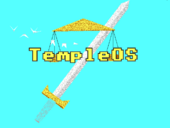
TempleOS (formerly J Operating System, LoseThos, and SparrowOS) is a discontinued operating system themed after the bible.
The operating system is coded in Davis's variant own of C (HolyC)[6]
- TempleOS history
For more detail on the reason for Davis creating this operating system see the wikipedia article.
Terry A. Davis developed TempleOS as God's third temple.[7] TempleOS had previous names (listed at the beginning of this section), TempleOS had it's final name change in mid-2013.[8] Development ceased in 2018 due to his death.
- There are two active forks of TempleOS;
- Consoles
- Nintendo - Game Boy
- Nintendo - Super Nintendo Entertainment System/Super Famicom
- Sega - Genesis/Megadrive
- Source ports
- Cosmo's Cosmic Adventure
- Doom
IRIX
IRIX is a discontinued operating system developed by Silicon Graphics (SGI), based on UNIX System V with BSD extensions.
IRIX was made to run on SGI's MIPS-based machines, and is where XFS and OpenGL originated.
- Consoles
- Game Boy (color)
- Nintendo - Game Boy Advance
- Super Nintendo Entertainment System
- Computers
- NEC - PC Engine / TurboGrafx-16
- Atari - 2600
- Atari - Atari ST
- x86 CPUs
- IBM - System 370/390/z
- Apple - Macintosh
Source ports (IRIX)
- ScummVM
- Doom
- SuperTuxKart
- Oolite
- Ultima VII The Black Gate
- Defendguin
- Rick Dangerous
- Syndicate
- ClassiCube
- Quake 3
- Nicky boum
- Cave story
| Name
|
Latest version
|
FLOSS
|
Active
|
Recommended
|
| nx-IRIX
|
?
|
✓
|
✗
|
!
|
- Baldur's Gate I
MediOS
MediOS is a discontinued operating system developed by the ArchOpen project.[9]
Emulators
- Nintendo Entertainment System
- Sega Master System / Game Gear
- Game Boy (Color)
Source ports
Zaurus
The Zaurus series of personal digital assistants (PDAs) created by Sharp Corporation.
Some emulators support the original Zaurus firmware and/or the OpenZaurus firmware.
Emulators
- Palm OS
- Commodore 64
- Sinclair ZX81
- Game Boy (Color)
- Multi-system
- ScummVM
SunOS
SunOS
| Developer
|
Sun Microsystems, Inc.
|
| Initial release
|
1982
|
| Latest release
|
/ 1994 (4.1.4)
|
| Succeeded by
|
Solaris
|
- Emulators
- Nintendo Game Boy
- Interpreters
- CHIP-8
| Name
|
Latest version
|
FLOSS
|
Active
|
Recommended
|
| Chip-8 for Suns
|
?
|
?
|
✗
|
!
|
See also
References and Notes
- References
- Notes
- ↑ All cores with a license except Snes9x are GPL2 or LGPLv2.1
- ↑ As calculated by Carlo Delhez's clkfreq, originally distributed with his XTender emulator. The ZX81 has relatively complicated timing mechanics, depending on signalling of WAIT during NMI; relative speed is a measurement of how closely an emulator matches a real machine in terms of clock cycles spent processing within a frame. 100.0% denotes the same execution speed as a real machine.
- ↑ After turning off the simulated hardware improvements that were not standard in the original computer.
- ↑ 4.0 4.1 Shareware. Requires license to unlock full version.
- ↑ Versions 2.15 α7 and its source code (2.15s) are currently lost. The latest version downloadable is 2.10 α6 along with its source code (2.10s).
- ↑ Source code availiable under the Doom Source License
- ↑ Recommended if you have a 3dfx card
- ↑ Mainstream support ended on October 9, 2018. Extended support ended on October 10, 2023
- ↑ Pocket PC 2000 Mainstream support ended on September 30, 2005. Extended support ended on October 9, 2007. Pocket PC 2002 Unsupported as of October 14, 2008
- ↑ Windows Mobile 2003: Mainstream support: Ended on July 14, 2009 Extended support: Ended on July 8, 2014. Windows Mobile 5.0: Mainstream support: Ended on October 12, 2010 Extended support: Ended on October 13, 2015. Windows Mobile 6.0, 6.1 and 6.5: Unsupported as of January 8, 2013.
- ↑ The source code will be released when emulation improves.
- ↑ At least 3.5.5 according to Changelog


